
OK Soda
USA
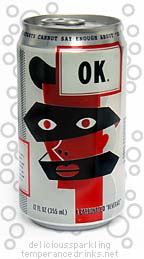 |
What was the point of OK Soda? In 1994, an unusual new soft drink appeared on store shelves in a select few cities in the U.S., including Minneapolis, my town. The cans showed up without much explanation, and indeed the soda seemed intentionally elusive and mysterious. Someone was spending a lot of money to advertise this drink, with huge billboards in a distinctly awkward and eye-catching style. Unlike other big- budget product launches, OK Soda drew attention to, yet refused to explain itself. Were the rumors and conspiracy theories really true that this funny little off-kilter drink was simply a marketing campaign by the biggest, slickest advertiser of them all: Coca-Cola? Of course, it was. After the initial surprise at seeing a soda can with Eightball and Big Baby comics characters printed on it, the cynicism set in. Just what was this monster corporation doing making an obscure off-brand soda with underground comics characters on it? For skeptics like me, all those Reagan years had bred a mistrust of marketing and the greedy capitalist powers behind it. The struggle for quality and justice in the consumer market seemed to be a daily personal choice. If I spend money, how do I affect the rest of society? Does my purchase encourage individual freedom, economic justice, and environmental stewardship, or simply more consumerism and waste? Despite the optimism that the influence of my small purchases might change the world, greed and exploitation seemed to be winning in the worldwide marketplace. The academics labelled it "late-stage capitalism", as if to say "enough already", though it was obvious nobody was paying any attention to them. The roving eye of exploitative capitalism searched by night and day for new markets and secret hollows of untapped consumer spending power. The suburbs were already saturated with armies of mass-market drones waiting to purchase the newest novelty fad and discard it without a thought, as if all new ideas were simply shallow styles to be used up and thrown out, without any deeper meaning. Those who cared about deeper ideas shunned the crap mass market, scorned the suburbs, and took refuge in local coops, independent bookstores, indie rock bands and underground cultures which the mass-market didn't seem to know about yet. Those who cared about quality and justice felt outrage at the empty materialism of the clueless majority of the public, and hostility toward the capitalists and marketers who led the sheep so mindlessly along. Anything worth caring about was in danger of being discovered and exploited by the forces of darkness, and any small subculture seemed powerless against the smothering homogenizing forces of the mass-market dollar in its endless search for novelty to exploit for a quick profit. Onto this battlefield came OK Soda. Was it a Trojan horse of the enemy? There were rumors that it was an insidious plot by Coca-Cola to lay claim to the common word "okay" (said to be the only English word more recognized around the world than "coke"). Just what were they up to? And how could they reassure us that everything was okay when this situation was obviously not? The important thing was to not be fooled by such double-speak marketing. Well that was how the world seemed to be back in 1994. Now decades later I am tempted to wax nostalgic about OK Soda. I can't remember what it tasted like, beyond a vague memory of Dr. Pepper sort of fruit cola. Perhaps I only tried it once. A few years after it was gone a friend gave me the can pictured above. There were several unique designs of cans, each with artwork by various underground comics artists, along with strange aphorisms, an OK Soda Manifesto, even an 800 number you could call to receive cryptic messages. It was as if this mysterious product really had stepped forth from the surreal world where Bob Dobbs, Mr. Jones and Julius Knipl lived. OK Soda had a tantalizing mystery and conspiratorial sense of humor. Looking back it all seems very funny and clever. Maybe Coca-Cola was the only company that could have created such a gloriously Dada product. But the confusing intentions and lackluster flavor of the beverage worked against OK. The drink never sold well in its product trial. Seven months later, by the end of 1994, OK Soda disappeared back into the mists from where it had come. Further reading:
Made by The Coca-Cola Company |